Comprehensive vs Collision Insurance Explained: Key Differences & Costs
Navigating the landscape of auto insurance policies can feel confusing when you encounter industry jargon. Drivers frequently ask about physical damage coverages, especially when financing a vehicle or upgrading an existing plan. Specifically, understanding the distinction between collision and comprehensive coverages is essential for every car owner.
While state laws require driver liability coverage to pay for harm caused to others, physical damage protection covers your own automobile. Consequently, purchasing the right balance between comprehensive and collision coverage ensures you do not face unexpected out-of-pocket repair bills after an incident.
This guide provides comprehensive vs collision insurance explained in clear, practical terms. You will learn how each policy type functions, examine real-world driving scenarios, and discover how to optimize your coverage limits for maximum financial protection.
Quick Summary: Comprehensive vs. Collision
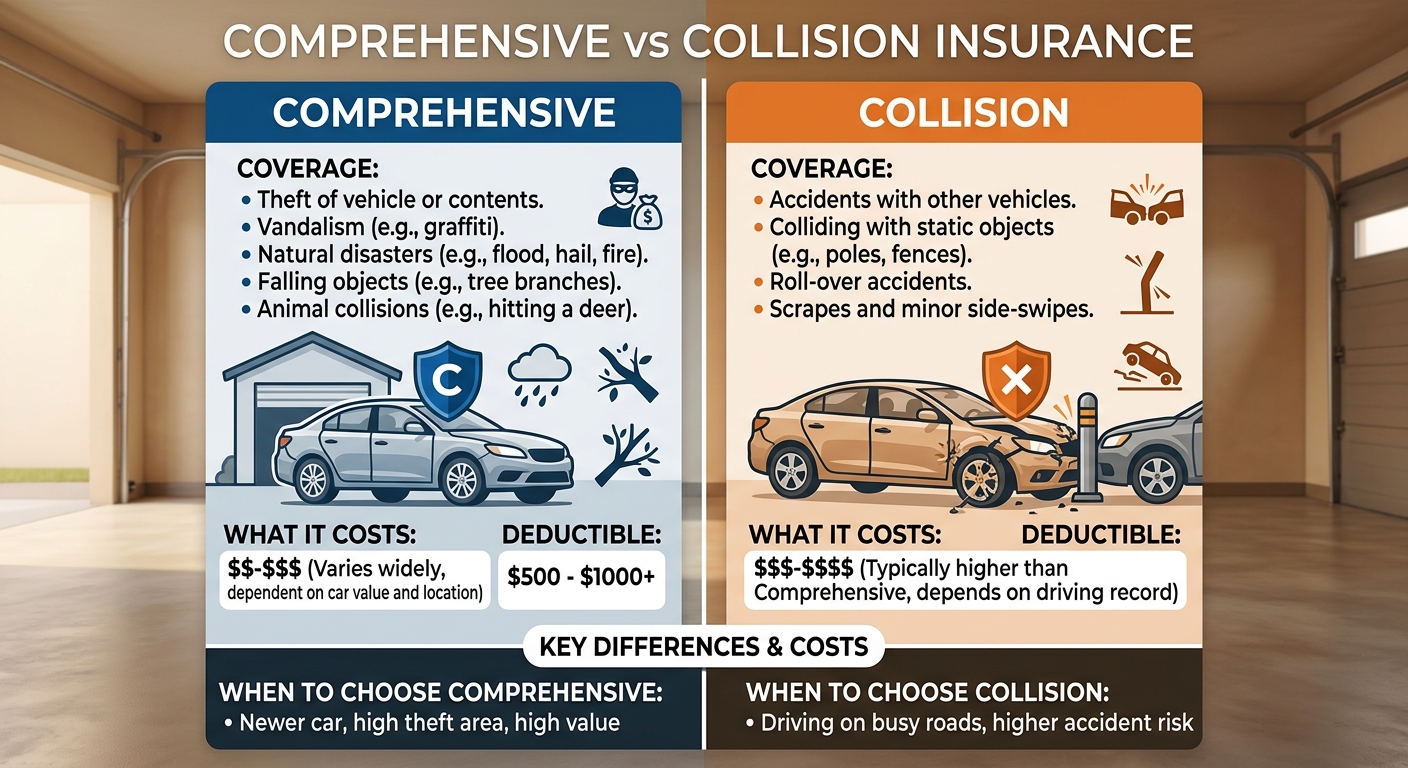
- Collision Coverage: Protects your vehicle when it collides with another automobile, object, or rollover hazard while driving on public roads.
- Comprehensive Coverage: Protects your vehicle against non-collision events, including vehicle theft, severe weather, fallen tree branches, vandalism, and animal strikes.
- Full Coverage Integration: Combining both physical damage coverages along with mandatory liability protection establishes what lenders call a full coverage auto policy.
What Is Collision Insurance and How Does It Work?
Collision insurance is a dedicated physical damage endorsement designed to repair or replace your vehicle after an impact event. Regardless of who caused the traffic accident, collision coverage pays for your vehicle’s structural repairs once you pay your chosen out-of-pocket deductible.
Additionally, collision protection applies whether your car hits another vehicle or strikes a stationary physical object. Therefore, it serves as your primary financial shield during active driving accidents.
Common Scenarios Covered by Collision Insurance
- Multi-Vehicle Accidents: You collide with another automobile at an intersection or in a highway rear-end accident.
- Stationary Object Impacts: You accidentally drive into a guardrail, telephone pole, street sign, concrete wall, or tree while maneuvering.
- Single-Vehicle Rollovers: Your vehicle loses traction on an icy road, skids off the asphalt, and flips over into a ditch.
- Pothole Damage: You strike a deep road pothole at high speed, severely damaging your car’s suspension and wheel rim assemblies.
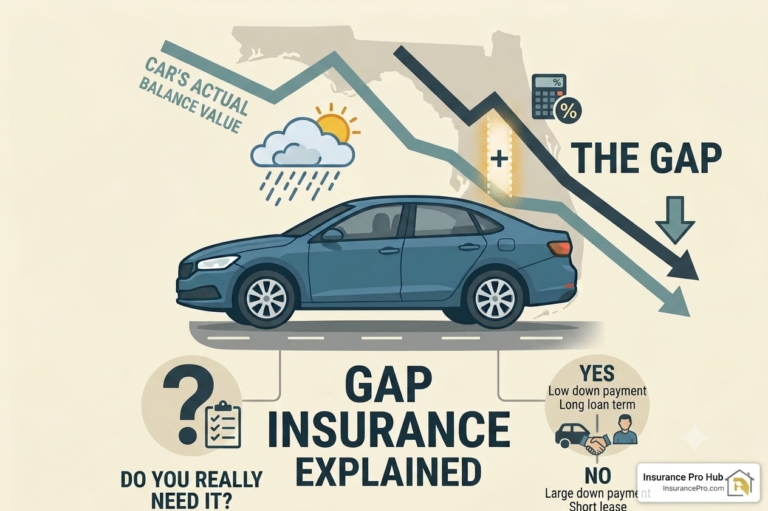
When you file a collision claim, your insurer calculates the total cost of physical repairs. If repair costs exceed the actual market value of your vehicle, the adjuster declares the car a total loss. To understand how insurers calculate cash values during total losses, read our complete guide explaining what is gap insurance and how it protects financed car balances.
What Is Comprehensive Insurance and How Does It Work?
Comprehensive insurance—frequently referred to in the industry as «Other Than Collision» coverage—protects your vehicle against unpredictable external hazards. Unlike collision coverage, comprehensive policies respond to damage caused by events outside your direct driving control.
Consequently, if your car suffers physical damage while parked peacefully in your driveway or garage, comprehensive coverage acts as your primary insurance protection.
Common Scenarios Covered by Comprehensive Insurance
- Vehicle Theft and Vandalism: Criminals break into your vehicle, steal the car entirely, or spray-paint exterior body panels.
- Extreme Weather Events: Hailstorms dent your roof, flash floods submerge your engine block, or high windstorms blow heavy debris into your windshield.
- Animal Invasions and Collisions: You strike a deer or large animal while driving down a rural highway at night, damaging your front bumper assembly.
- Falling Objects: A heavy tree branch snaps during a winter storm and crushes your parked car’s roof structure.
- Glass and Windshield Damage: A stray rock kicks up from a gravel truck on the highway, cracking your front windshield glass.
Understanding your physical policy limits helps you manage unexpected repair expenses smoothly. If you need step-by-step assistance managing paperwork after a sudden loss event, review our guide on how to file a car insurance claim to streamline your payout process.
Key Differences: Comprehensive vs Collision Comparison
To compare these physical damage coverages side by side, examine the detailed comparison table below. This matrix highlights the distinct operational triggers for each policy selection.
| Coverage Feature | Collision Insurance | Comprehensive Insurance |
| Primary Trigger Event | Physical impact with cars or stationary objects | Non-collision external damage and environmental hazards |
| Vehicle Motion Status | Vehicle is usually in motion during the impact | Vehicle is frequently parked or struck by outside forces |
| Animal Strike Handling | Excluded (Categorized under comprehensive) | Covered (Striking a deer or animal falls under comprehensive) |
| Theft and Vandalism | Excluded completely | Covered fully minus your chosen deductible |
| Average Monthly Cost | Higher (Reflects frequent road accident risks) | Lower (Reflects lower statistical hazard rates) |
| Deductible Application | Required per collision claim event | Required per comprehensive claim event |
Real-World Driving Scenarios: Which Policy Applies?
Determining which policy responds to specific accidents can occasionally seem complex. Therefore, analyzing realistic driving situations helps clarify how insurance adjusters categorize physical damage claims.
Scenario A: Hitting a Deer on a Rural Road
Suppose you are driving home at dusk and a deer suddenly leaps into the road. You hit the animal directly, causing significant front-end radiator damage.
- Which Coverage Responds? Comprehensive Insurance. Insurance regulations classify animal collisions as unpredictable environmental hazards rather than driver collisions.
Scenario B: Swerving to Avoid an Animal and Hitting a Tree
Now consider a slight variation of that event. You see the deer in the road, swerve abruptly to avoid hitting it, lose control of your steering, and crash into a roadside tree.
- Which Coverage Responds? Collision Insurance. Because your car did not make physical contact with the animal and instead struck a stationary tree, adjusters process the event as a single-vehicle collision.
Scenario C: Parking Lot Door Dings and Shopping Carts
You park your vehicle at a local grocery store. While you shop inside, a severe wind gust pushes a heavy runaway shopping cart directly into your passenger door, leaving a deep dent.
- Which Coverage Responds? Comprehensive Insurance. Because the damage resulted from wind-blown debris striking a stationary vehicle, comprehensive protection handles the body repair bill.
To ensure you maintain balanced coverage limits across all driving scenarios, review our step-by-step guide on how to choose car insurance coverage for beginner drivers.
Understanding Deductibles and Out-of-Pocket Costs
Both comprehensive and collision coverages operate alongside policy deductibles. A deductible represents the specific dollar amount you agree to pay out of pocket before your insurance company pays for remaining repair balances.
For example, if an adjuster approves a $3,000 body shop repair estimate and your policy carries a $500 collision deductible, you pay $500 directly to the mechanic shop. Subsequently, your insurer pays the remaining $2,500 balance.
+------------------------------------------------------------------------+
|                     DEDUCTIBLE IMPACT ON PREMIUMS                      |
+------------------------------------------------------------------------+
|  LOWER DEDUCTIBLE ($250)   --->  Higher Monthly Policy Rates           |
|  HIGHER DEDUCTIBLE ($1,000) --->  Lower Monthly Policy Rates           |
+------------------------------------------------------------------------+
Selecting higher deductible thresholds—such as moving from $250 up to $1,000—reduces your recurring monthly insurance rates noticeably. To learn how adjusting your deductible choices can lower your monthly auto bills, explore our detailed primer explaining what is a car insurance deductible.
Furthermore, comparing rates across multiple national carriers helps you find optimal deductible options. Check our compiled list of the cheapest car insurance companies to evaluate budget-friendly physical damage coverage plans.
Do You Really Need Both Coverages?
Deciding whether to carry both comprehensive and collision coverages depends heavily on your vehicle’s financial value and ownership status.
Key Decision Drivers for Physical Damage Protection
- Financed or Leased Vehicles: Lenders and leasing companies legally require you to carry both comprehensive and collision insurance until your auto loan is fully paid off.
- The 10% Value Rule: If the total annual cost of your physical damage premiums plus your deductible exceeds 10% of your car’s market value, dropping comprehensive and collision coverage may save money.
- Emergency Fund Reserves: If your car is damaged tomorrow, do you have enough cash in savings to purchase a replacement vehicle without insurance help?
If you drive an older vehicle with low market value, removing physical damage coverage can reduce your bill substantially. If you want to explore additional techniques for minimizing your vehicle overhead, read our popular guide on 10 proven tricks to lower your car insurance payments easily.
Frequently Asked Questions (FAQs)
Is comprehensive car insurance required by state law?
No. State motor vehicle laws only require driver liability insurance to pay for injuries and property damage you cause to other people. However, if you finance or lease your car, your bank or lender will contractually require comprehensive and collision coverages.
Does collision insurance cover damage to the other driver’s car?
No. Collision insurance pays exclusively for physical damage done to your own vehicle. Conversely, your Property Damage Liability coverage pays for repairs to the other driver’s car when you cause an accident.
Will filing a comprehensive claim make my insurance rates increase?
Generally, a single comprehensive claim causes a much smaller rate increase than an at-fault collision claim. Because comprehensive claims stem from unpredictable events like weather or vandalism, insurers do not view policyholders as irresponsible drivers for filing them.
Final Guidance and Consumer Resources
Selecting the right combination of comprehensive and collision insurance allows you to protect your auto investments without overpaying on monthly premiums. By evaluating your vehicle’s market value, setting reasonable deductible thresholds, and comparing rates across top providers, you can maintain continuous financial security on the road.
For official updates on consumer protection standards, state policy guidelines, and insurance market data, explore the public education hubs managed by the National Association of Insurance Commissioners (NAIC).