How to Buy Car Insurance for the First Time: A Step-by-Step Guide
Buying auto insurance for the first time can feel intimidating when you face unfamiliar industry terms and variable pricing formulas. However, securing your first independent policy is a straightforward administrative process when you follow a clear plan.
Whether you are purchasing your very first automobile or transitioning off a family household policy, getting proper coverage is legally mandatory in nearly every state. Furthermore, driving without active insurance exposes you to heavy legal fines, driver’s license suspensions, and catastrophic out-of-pocket financial liability.
This comprehensive guide breaks down how to buy car insurance for the first time. You will learn what documents to prepare, how to select appropriate coverage limits, and how to secure affordable rates as a new policyholder.
First-Time Buyer Cheat Sheet
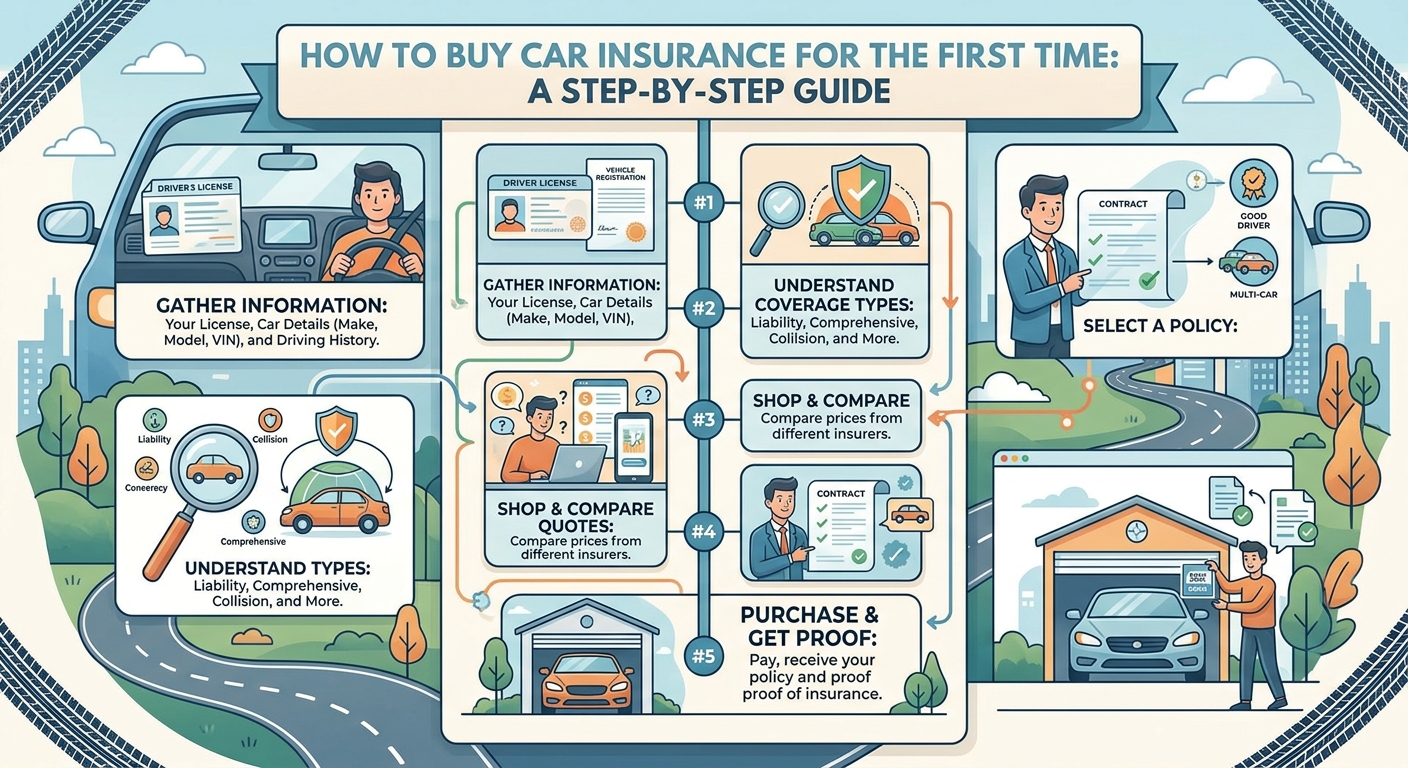
- Gather Key Documents: Prepare your driver’s license number, Vehicle Identification Number (VIN), garaging address, and estimated annual driving mileage.
- Select Your Policy Tiers: State laws mandate basic liability protection, but financed cars contractually require full physical damage coverage.
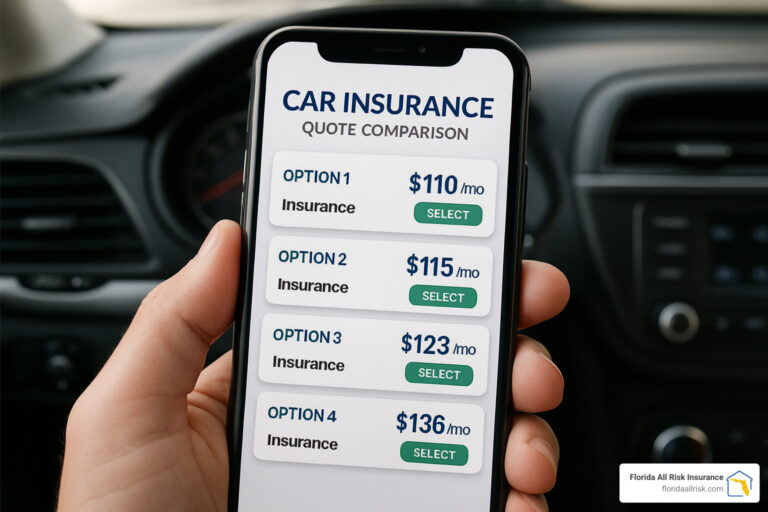
- Compare Multiple Quotes: Request side-by-side quotes from at least three national insurance companies using identical coverage limits.
- Claim Immediate Discounts: Unlock student rewards, paperless billing, auto-pay incentives, and telematics onboarding savings right away.
Essential Documents You Need Before Requesting Quotes
Before you open quote tools online or call an insurance agent, gather your personal documentation. Having your information organized speeds up the quote process and ensures you receive accurate price estimates.
1. Driver’s License Information
Insurers require the driver’s license number for every person who will operate the vehicle regularly. Underwriters use your license details to pull your official driving record from state motor vehicle databases.
2. Vehicle Identification Number (VIN)
Your vehicle’s VIN is a 17-digit code located on your car’s registration card, vehicle title, or dashboard driver’s side corner. The VIN reveals the car’s exact year, make, model, trim level, and safety features to the insurance company’s pricing software.
3. Primary Garaging Address
You must provide the exact physical address where the automobile is parked overnight. Insurance companies use your ZIP code to evaluate regional traffic density, local theft rates, and weather hazards.
4. Driving Record History and Current Odometer Reading
Be prepared to answer questions about any traffic tickets or minor accidents from the past three to five years. Additionally, record your car’s current mileage reading and estimate your annual driving commute.
Step 1: Determine How Much Coverage You Need
Understanding basic insurance tiers prevents you from overpaying for unnecessary add-ons or purchasing insufficient liability protection.
+------------------------------------------------------------------------+
|                      CAR INSURANCE COVERAGE TIERS                      |
+------------------------------------------------------------------------+
|  LIABILITY COVERAGE      --> Pays for damage & injuries you cause      |
|  COMPREHENSIVE COVERAGE  --> Pays for theft, weather, and vandalism     |
|  COLLISION COVERAGE      --> Pays for accident damage to your car      |
|  FULL COVERAGE POLICY    --> Combines Liability + Comprehensive +      |
|                              Collision into one contract               |
+------------------------------------------------------------------------+
State-Mandated Minimum Liability Insurance
State laws legally require you to carry minimum levels of liability coverage. Liability insurance pays for medical bills and property repairs for other drivers when you cause a road collision.
However, state minimum limits are frequently too low to cover severe multi-car accidents. Consequently, financial advisors recommend carrying liability limits of at least $100,000 per person and $300,000 per accident for bodily injury, alongside $100,000 for property damage.
Full Coverage vs. Liability Only
If you drive an older vehicle that you own outright, purchasing liability protection alone may be sufficient. Conversely, if your vehicle is financed through a bank loan or lease contract, your lender will legally mandate full physical protection.
To explore how physical protection works in detail, read our complete guide explaining how does full coverage car insurance work before finalizing your policy choices.
Step 2: Choose Your Physical Damage Deductibles
If you elect to add physical protection to your policy, you must select your out-of-pocket deductible amounts. A deductible represents the specific amount you pay toward vehicle repairs before your insurer pays the remaining bill.
Typically, drivers choose deductibles ranging between $250 and $1,000. Selecting a higher deductible lowers your regular monthly bill because you assume greater financial responsibility during a claim.
+------------------------------------------------------------------------+
|                      DEDUCTIBLE VS PREMIUM BALANCE                     |
+------------------------------------------------------------------------+
|  Higher Deductible ($1,000)  --->  Lower Monthly Insurance Premium     |
|  Lower Deductible ($250)     --->  Higher Monthly Insurance Premium    |
+------------------------------------------------------------------------+
Before finalizing your deductible, examine the key differences between comprehensive vs collision insurance explained to see how deductibles apply to distinct accident types.
Furthermore, ensure that you maintain enough money in an emergency savings account to cover your chosen deductible if an unexpected crash occurs. To understand how deductibles function during claims, consult our detailed primer on what is a car insurance deductible.
Step 3: Compare Quotes Across Multiple Insurance Carriers
Never buy the very first auto policy quote you receive. Insurance algorithms evaluate risk profiles differently, meaning quotes for the exact same car can vary by hundreds of dollars between companies.
Request quotes from at least three major national carriers and regional insurance providers. To establish a realistic price expectation, review our compiled list of the cheapest car insurance companies to identify top budget-friendly options.
The comparative table below illustrates average annual rate estimates for first-time policyholders across major driver categories:
| First-Time Buyer Profile | Average Annual Cost (Liability Only) | Average Annual Cost (Full Coverage) | Recommended Carrier Focus |
| Young Adult (Ages 18–21) | $1,850 / year | $3,600 / year | Look for student & telematics discounts |
| First-Time Adult (Ages 22–25) | $1,250 / year | $2,450 / year | Compare multi-policy bundling options |
| Driver Over Age 25 | $850 / year | $1,650 / year | Focus on clean driving record rewards |
| Financed Vehicle Buyer | Not Recommended | $2,200 / year | Compare carriers offering gap insurance |
If you are deciding between top national insurance brands, review our detailed head-to-head analysis of geico vs progressive car insurance to evaluate pricing and app features.
Step 4: Maximize Discounts for First-Time Policyholders
Insurance companies offer numerous discount options that can significantly reduce your initial monthly rates. Make sure you request all applicable discounts when setting up your account.
Key Discounts for First-Time Buyers
- Good Student Discount: Maintain a 3.0 GPA or higher in high school or university to save up to 15%.
- Telematics Onboarding: Enroll in mobile app driving tracking to capture immediate policy sign-up credits.
- Paperless and Auto-Pay: Opt into electronic document delivery and automatic monthly bank transfers for instant bill credits.
- Driver Training Credits: Complete an accredited state defensive driving course to lower your base risk score.
Young buyers can review additional specialized saving strategies in our dedicated guide on the best car insurance for young drivers.
Additionally, explore our exhaustive car insurance discounts list to ensure you do not miss hidden savings during checkout.
Step 5: Bind Your Policy and Notify Your Lender
Once you select your insurance carrier and finalize your policy options, you are ready to bind your coverage.
- Select Your Effective Start Date: Set your policy start date to begin on or before the day you take physical possession of the car. Never drive an uninsured vehicle off a dealer lot.
- Submit Your First Payment: Pay your initial down payment or set up automatic recurring monthly credit card transfers.
- Download Proof of Insurance: Download digital insurance cards to your smartphone and print physical copies for your glove box. State laws require you to present proof of insurance during traffic stops.
- Send Proof to Your Financial Lender: If you financed your car, provide your bank with your new insurance policy details. If your loan balance exceeds your vehicle’s market value, ask your provider about adding loan protection. Read our guide explaining what is gap insurance to learn how it covers loan balances during total losses.
+------------------------------------------------------------------------+
|                     POLICY ACTIVATION FLOWCHART                        |
+------------------------------------------------------------------------+
|  Select Coverage Limits  --->  Submit First Down Payment               |
|                                         |                              |
|  Notify Vehicle Lender   <---  Download Digital Insurance ID Cards     |
+------------------------------------------------------------------------+
Common First-Time Buyer Mistakes to Avoid
Avoiding simple administrative errors saves you money and prevents legal complications later.
Purchasing Only State Minimum Coverage
Buying bare-minimum liability coverage leaves your personal assets vulnerable if you cause a serious crash. Raising your liability limits slightly adds minimal cost to your monthly bill while providing substantial financial protection.
To help select balanced limits, read our comprehensive guide on how to choose car insurance coverage for new drivers.
Forgetting to Compare Rates Regularly
Many new drivers stay with their initial carrier for years out of habit. However, insurance rates change frequently. Shopping the market annually ensures you always maintain optimal pricing.
If you find a cheaper policy in the future, follow our step-by-step instructions on how to switch car insurance companies to transition without coverage gaps.
Frequently Asked Questions (FAQs)
Can I buy car insurance before buying the car?
Yes. You can request quotes and set up an insurance policy shell using the vehicle’s VIN before finalizing your purchase at the dealership. Once you sign the purchase paperwork, call the insurer to activate the policy instantly.
How fast does a new car insurance policy take effect?
Auto insurance policies can take effect immediately upon submitting your electronic payment and receiving confirmation numbers. Most major carriers generate digital proof of insurance cards within minutes online.
Is it cheaper to stay on my parents’ insurance policy?
Yes. Remaining listed as an additional driver on a family household policy is almost always cheaper than purchasing an independent single-driver policy. However, if you move to a new permanent address, register the car in your own name, or move to a different state, you must purchase an independent policy.
Final Action Plan for New Drivers
Buying car insurance for the first time is a manageable process when you approach it systematically. By organizing your personal documents, choosing balanced liability and physical damage limits, and comparing quotes across multiple carriers, you can secure reliable protection at a fair price.
For official regulatory guidance, state-specific coverage requirements, and consumer protection resources, visit the education portal managed by the National Association of Insurance Commissioners (NAIC).